
What Is a DST File and How to Preview It Without Installing Anything
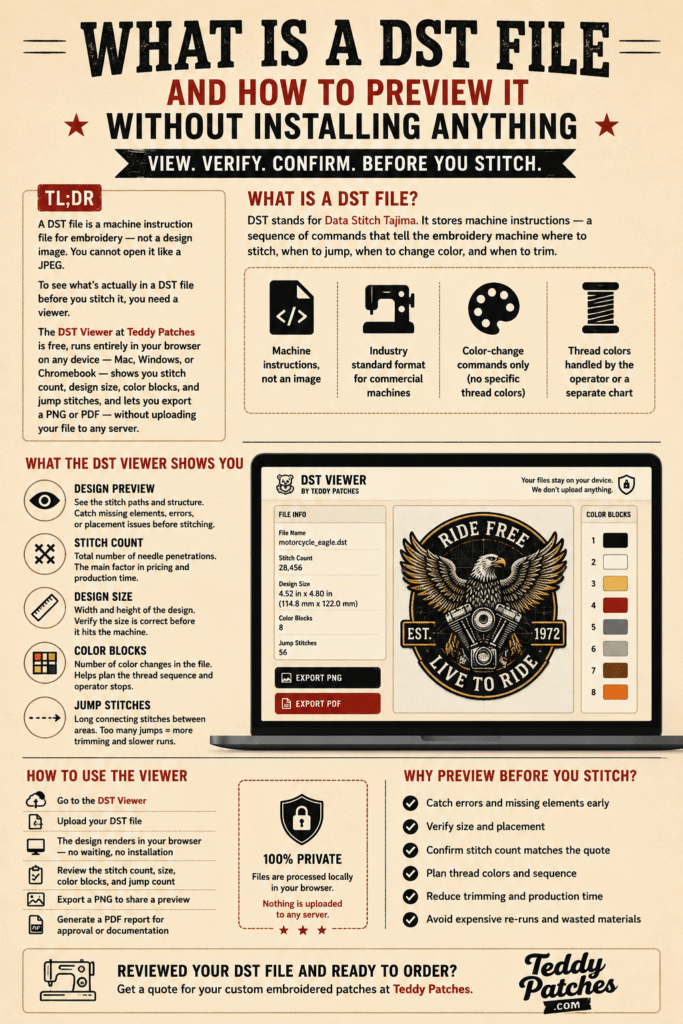
TL;DR: A DST file is a machine instruction file for embroidery — not a design image. You cannot open it like a JPEG. To see what is actually in a DST file before you stitch it, you need a viewer. The DST Viewer at Teddy Patches is free, runs entirely in your browser on any […]
Custom Patches for Motorcycle Rallies & Events: What to Order and When
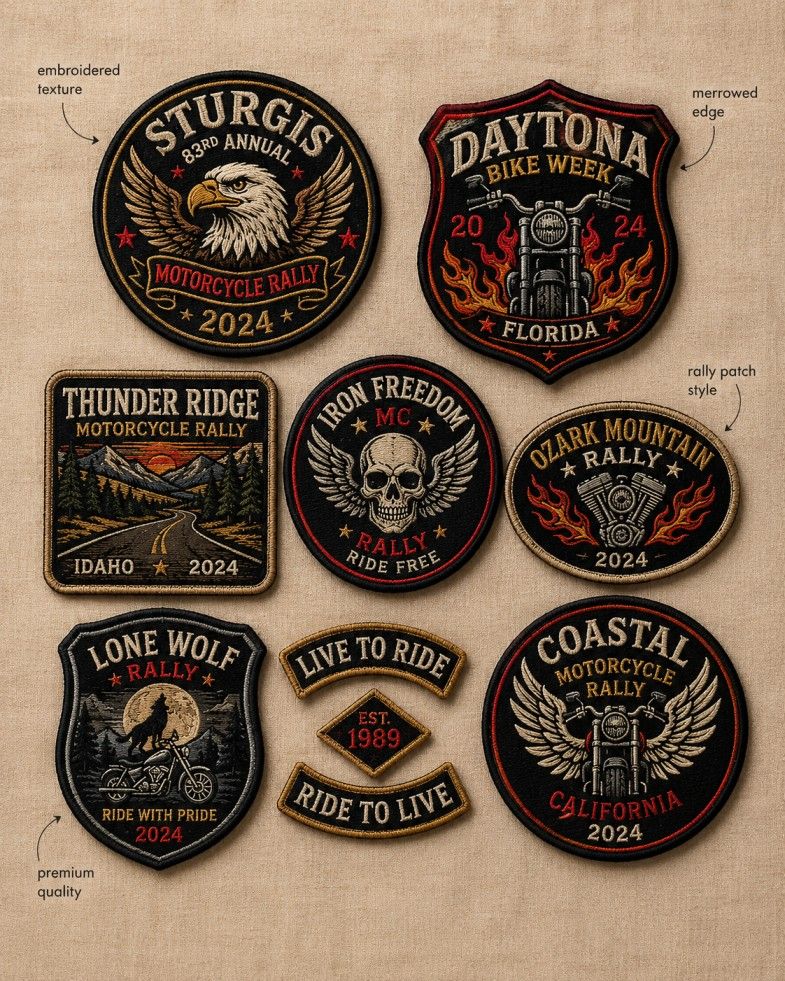
TL;DR: Rally patches are not the same as club patches. They are event-specific, date-stamped, and meant to be collected — not regulated. If you are attending Sturgis, Daytona, or any local run this season, ordering custom patches ahead of time is smarter and cheaper than buying whatever is left at the vendor booth. Here is […]
Top 8 Best Fonts for Motorcycle Patches — What Actually Works in Embroidery
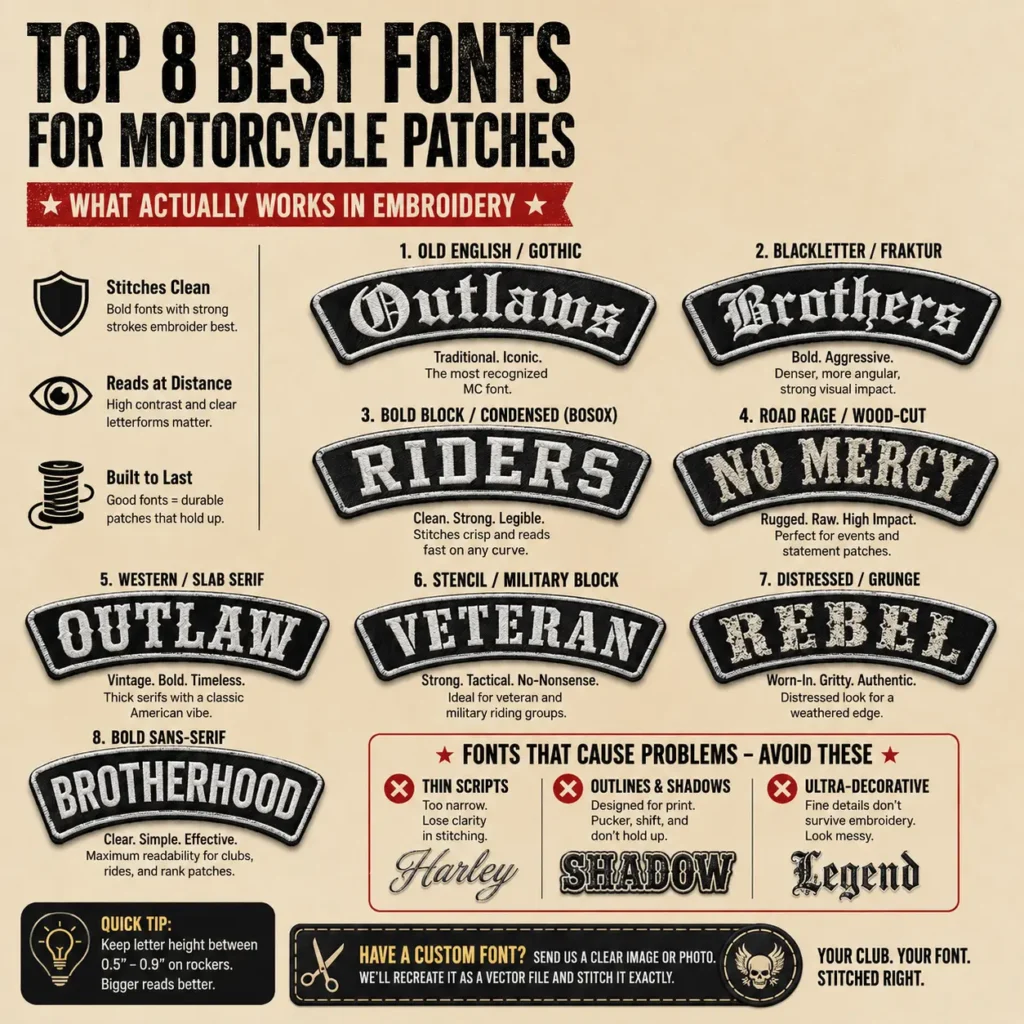
TL;DR: Old English and bold block fonts are the most widely used on MC patches because they stitch cleanly and read well at distance. Avoid thin scripts, outlines, and decorative fonts on small patches — they fall apart in embroidery. And if your club has a custom font nobody else uses? We can recreate it […]
Sew-On vs Iron-On vs Velcro Patches: Which Backing Should You Choose?
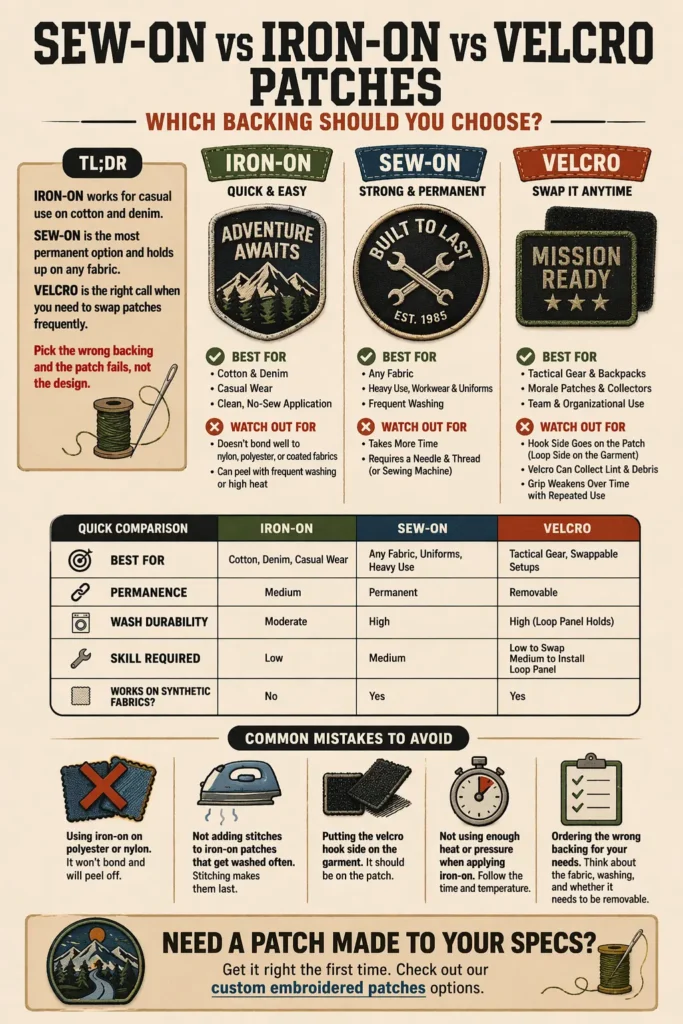
TL;DR: Iron-on works for casual use on cotton and denim. Sew-on is the most permanent option and holds up on any fabric. Velcro is the right call when you need to swap patches frequently. Pick the wrong backing and the patch fails, not the design. If you need a patch made to your specs with […]
Woven vs Embroidered Patches: Which One Should You Choose?
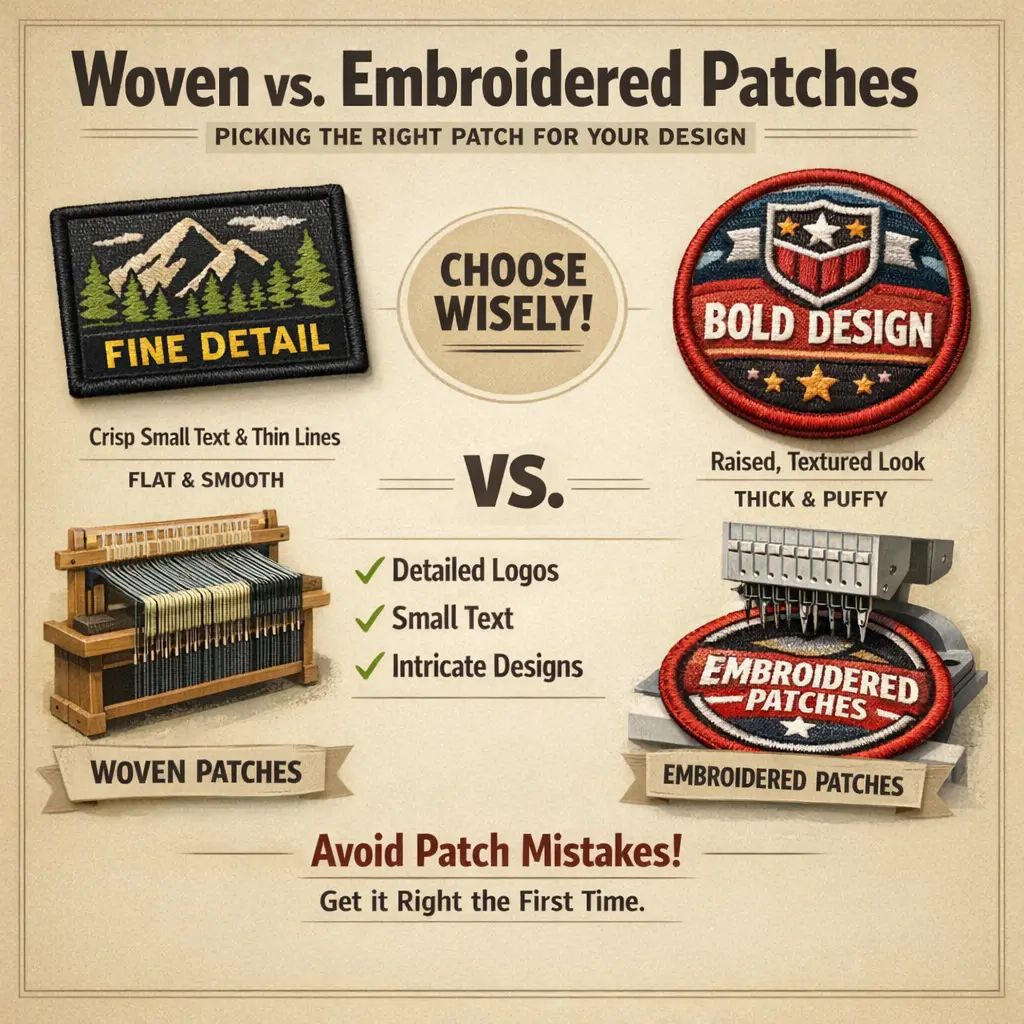
TL;DR: Woven patches are best for small text and fine detail. Embroidered patches give you a raised, textured look for bold designs. Pick the wrong one and your patch won’t look right. Nobody Tells You This About Custom Patches Most people make the same mistake. You upload your logo, pick a size, choose a […]
How to Design a Custom Motorcycle Club Patch (MC Patch Layout Guide)
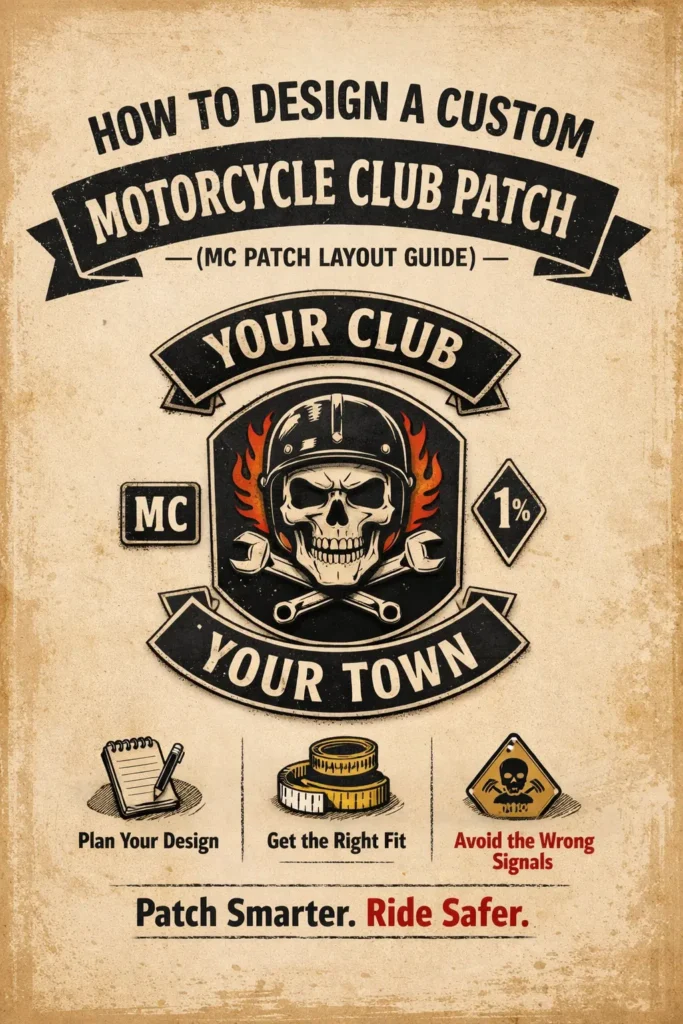
TL;DR: Designing a custom motorcycle club patch starts with knowing what type of rider or group you are. If you’re a formal MC, your layout follows a specific structure — center patch, top rocker, bottom rocker. If you’re a riding club or independent rider, you have more flexibility but still need to be smart about […]
Motorcycle Patches to Avoid If You’re Not in a Club
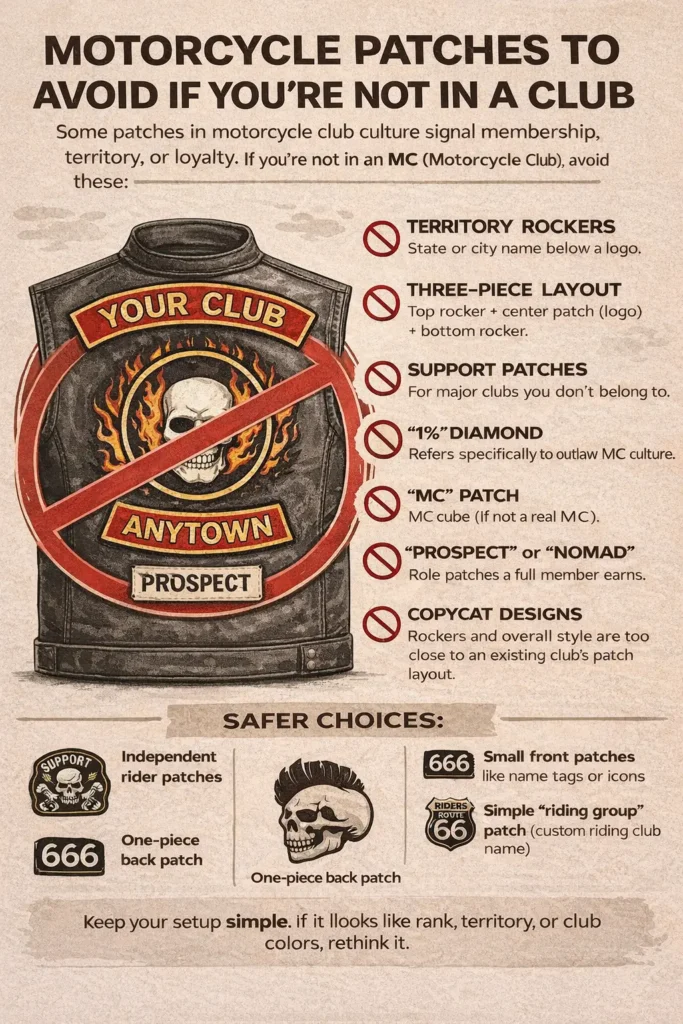
TL;DR: In motorcycle club culture, some patches are not just decoration. They can represent membership, territory, rank, or loyalty. If you’re not part of a recognized Motorcycle Club (MC), it’s best to avoid anything that looks like MC colors, a three-piece “3 patch rule” setup, territory rockers, or support patches connected to major clubs. If […]
Motorcycle Vest Rocker Patch Size Guide (Top & Bottom Rockers)
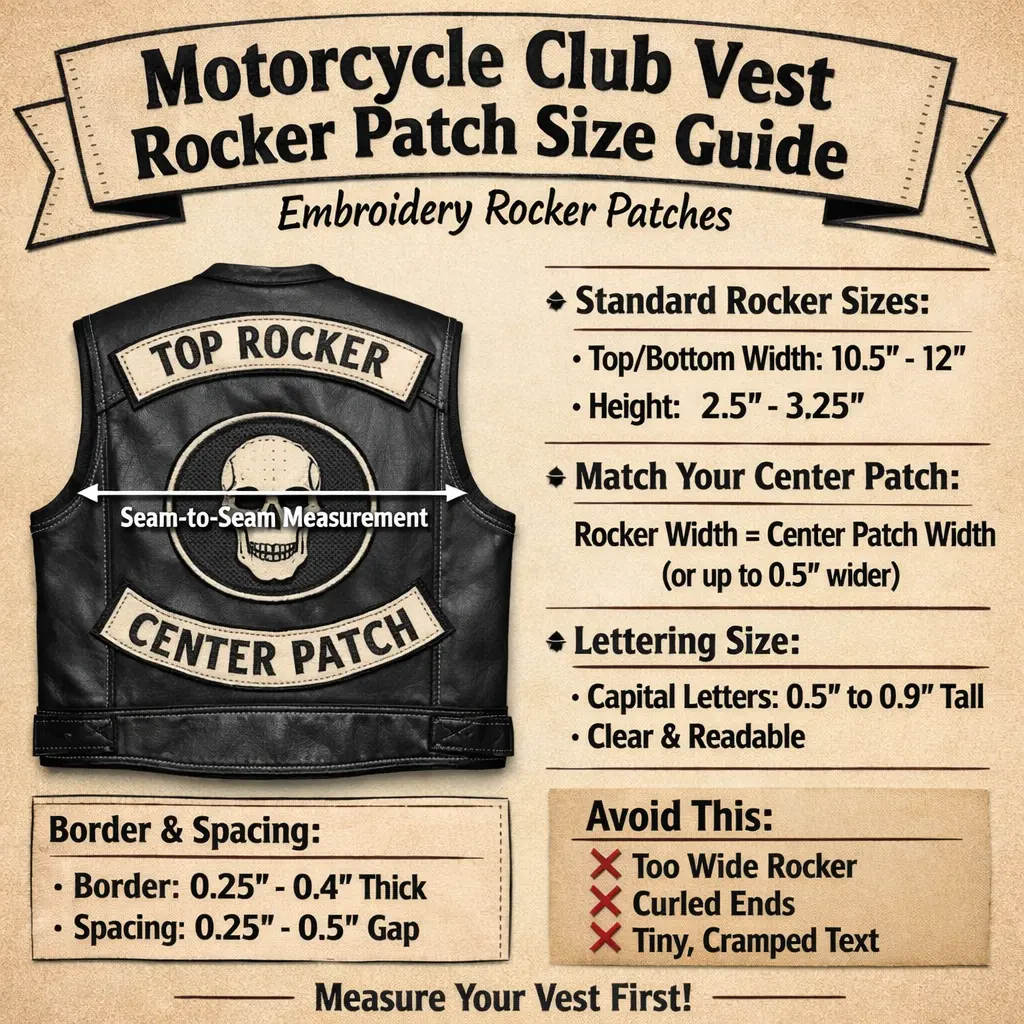
TL;DR: Rocker patches only look easy until the size is wrong. For most adult motorcycle vests, a clean top rocker usually lands around 10–12 inches wide, with 11 inches being the most common sweet spot. If the back panel is tight, go 9–10 inches. If it’s a wide panel, 12–13 inches can work. Height is […]
Custom Patch Size Guide: How to Choose the Right Size
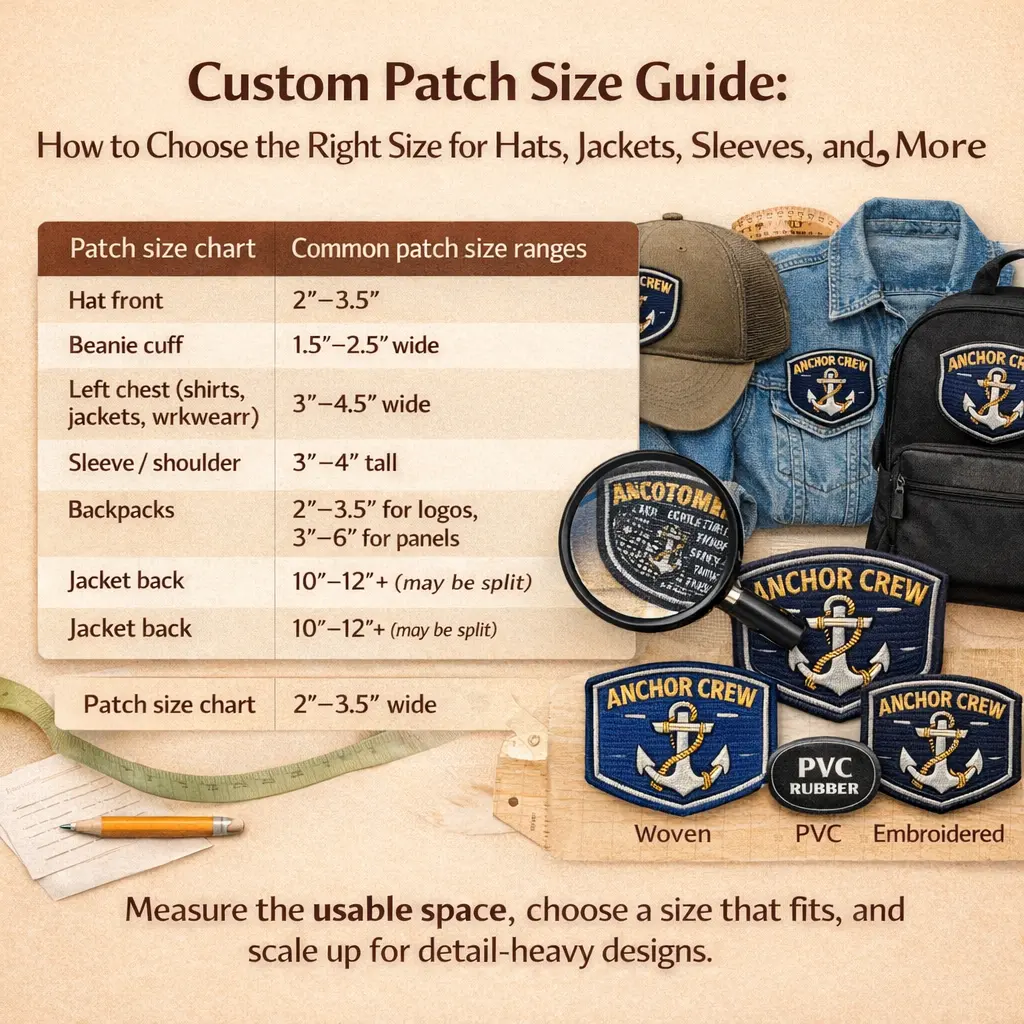
Custom Patch Size Guide: How to Choose the Right Size for Hats, Jackets, Sleeves, Backpacks, and More Choosing the right patch size comes down to two things: where it will go and how much detail your design needs to show clearly. This guide breaks down standard sizes for hats, sleeves, chest logos, backpacks, and jacket […]
OCP Patch Placement Guide for Tactical and Military Uniforms
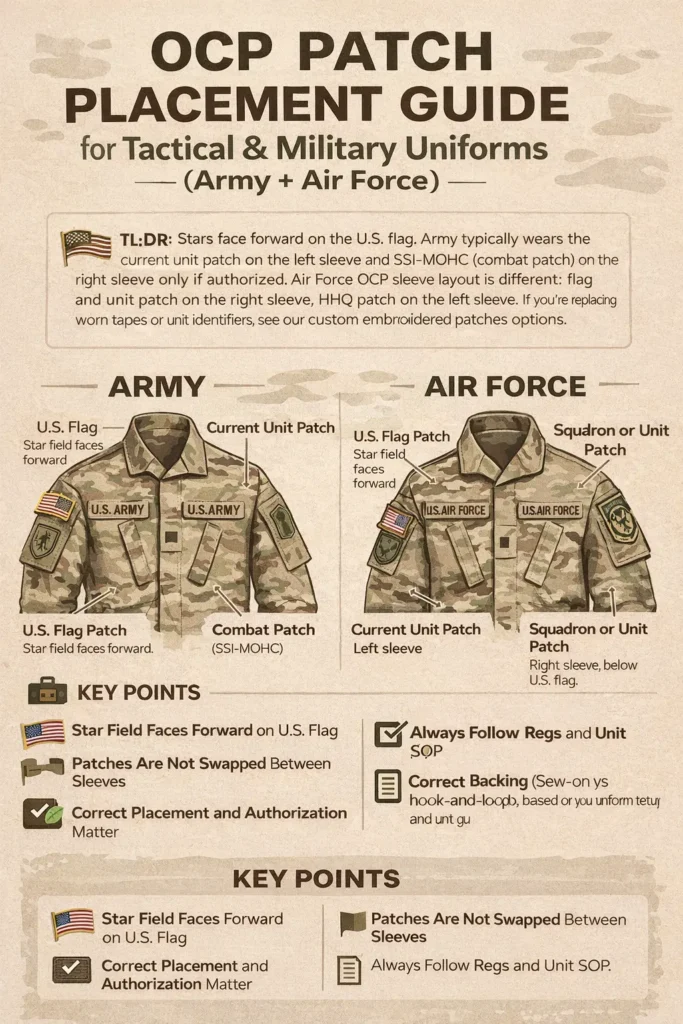
TL;DR: Stars face forward on the U.S. flag. Army typically wears the current unit patch on the left sleeve and SSI-MOHC (combat patch) on the right sleeve only if authorized. Air Force OCP sleeve layout is different: flag and unit patch on the right sleeve, HHQ patch on the left sleeve. If you’re replacing worn […]